Trump and Xi Jinping meeting represents a major moment in U.S.–China relations
- Written by: Times Media
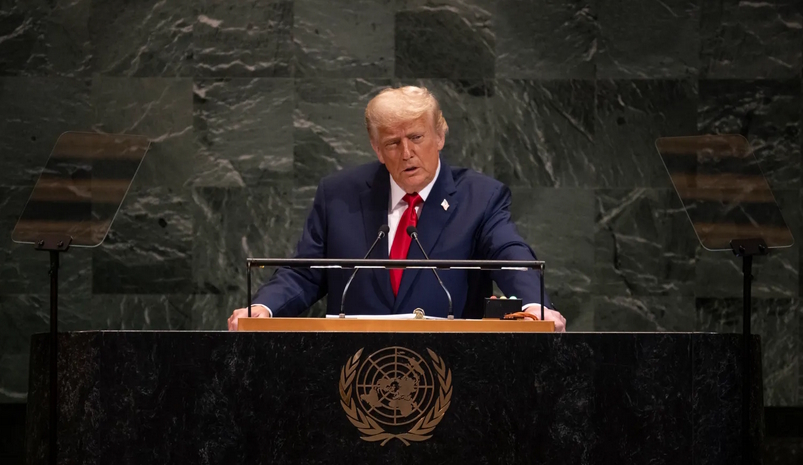
The forthcoming summit between Donald Trump (as President of the United States) and Xi Jinping (President of the People’s Republic of China) represents a major moment in U.S.–China relations. Preparations have been building for months and analysts view the meeting as both high-stakes and high-risk.
Strategic backdrop
-
The bilateral relationship is defined by deep structural tensions: trade imbalances, technology rivalry (especially semiconductors/rare-earths), supply-chain security, territorial/geopolitical issues (e.g., Taiwan, South China Sea), and diverging strategic visions.
-
Despite the rivalry, the U.S. and China remain interdependent economically—something both sides acknowledge.
-
More recently, trade tensions escalated significantly: China introduced stricter export controls on rare earths and critical minerals; the U.S. threatened sweeping tariffs (e.g., a proposed 100% tariff on Chinese goods from Nov 1) in response.
-
Concurrently, both capitals have shown interest in stabilising the relationship somewhat: for example, through a trade-truce extension and negotiations in places such as Stockholm or Malaysia.
Preparatory signals and agenda items
-
The timing of the summit is pegged around the upcoming APEC 2025 Leaders Meeting in South Korea (October 31–November 1), though the exact venue and format remain fluid.
-
Senior-level meetings (e.g., between U.S. Treasury Secretary Scott Bessent and Chinese Vice-Premier He Lifeng) have been working through export controls, shipping/port charges, rare-earths, agriculture and trade frameworks.
-
Key agenda items expected:
-
Trade & tariffs (including rare earths, critical inputs, shipping)
-
Technology/export controls (both directions)
-
Strategic/geopolitical issues such as Taiwan/South China Sea, North Korea/Russia linkage
-
Investment flows and supply-chain stability
-
A broader framework for managing the U.S.–China relationship (not just standalone deals)
-
Why this matters (for both sides)
-
For the U.S., a successful meeting offers an opportunity to stabilise markets, reassure U.S. business and global investors, and show diplomatic traction. It may also enhance the President’s image as a deal-maker.
-
For China, while it may not view a deal as existential, a meeting with the U.S. leader offers signalling value: to domestic constituencies, to key markets, and to global partners that Beijing can engage and shape major relationships.
What preparations are underway
Analysts generally frame the potential outcome into three categories: a big deal, a small deal, or no deal / limited deal. Here’s how each might play out:
1. Big Deal
In an optimal scenario:
-
Both leaders announce a roadmap for phased tariff reductions (or at least stabilisation) and greater predictability in trade policy.
-
China commits to meaningful steps on export-controls (rare earths, critical minerals) and improved access for U.S. firms, while the U.S. agrees to limit new export controls (or ease existing ones) in specified tech sectors.
-
The summit includes a broad framework agreement: e.g., stable supply chains, investment mechanisms, joint projects. This helps shift from crisis-mode to “managed competition”.
-
Possibly a visit by Trump to China (early 2026) or other top-level reciprocal engagement.
Such an outcome would be widely praised as a major reset, though it's important to be realistic about how much would truly be resolved.
2. Small Deal / Framework Agreement
More likely, analysts believe:
-
Leaders agree on a broad “framework” or joint statement recognising the need to stabilise ties, create mechanisms for consultation, but with limited concrete deliverables.
-
Some manageable short-term wins: e.g., extension of tariff truce, targeted investment pledges, commitment to talk more. But structural issues remain unaddressed.
-
This outcome still provides value: signalling stability to markets, creating “guardrails” for competition, and setting up further follow-through. For example: the summit itself becomes the milestone, rather than expecting sweeping agreements.
3. No Deal / Minimal Progress
Risk scenario:
-
The summit produces largely symbolic outcomes (photo op, joint communique) but with little concrete action.
-
Underlying tensions remain unresolved; new tariffs, export controls or other measures could still be introduced, undermining longer-term confidence.
-
The risk is that hopes for engagement raise expectations that aren’t met, which could trigger market/investor disappointment. Some analysts emphasise that this summit cannot resolve the deep-rooted structural tensions.
Why this matters for Australia / Indo-Pacific
As someone engaged in the broader Australian context, there are several spill-over implications to consider:
-
Supply-chain implications: The rare-earths/minerals dimension is significant for Australia (given its resources) and for businesses that depend on stable global value-chains. The cited $8.5 billion pipeline between the U.S. and Australia for rare earths underscores the importance.
-
Trade/commercial environment: A stabilised U.S.–China relationship or clearer frameworks may benefit regional trade flows, reduce uncertainty for exporters/importers in Australia and the Asia-Pacific.
-
Geopolitical alignment: If the U.S. and China manage to stabilise competition, it could relieve pressure on middle-powers and regional actors (including Australia) to pick sides. Conversely, a collapse of the negotiation could escalate tensions and complicate regional strategy.
-
Timing for your business: For an Australian business or marketer, watching the outcome may help calibrate risk assessments around China-linked supply-chains, tariffs, raw-material costs, and regional trade policy.
Key take-aways and what to watch
What to look for
-
Date, venue and format of the summit: confirmation or changes will signal readiness/priority.
-
The language of any joint communique: whether terms like “tariffs”, “export controls”, “rare earths”, “Taiwan”, “supply-chains” appear—and how strongly.
-
Concrete commitments vs vague language: Are there measurable targets (e.g., X % reduction, Y billion investment) or just statements of intent?
-
Post-summit follow-through: Will working-level mechanisms be established? Will there be next-step meetings? Without follow-up, momentum may peter out.
-
Market/business responses: Financial markets, commodity-prices, trade flows will react to perceived credibility of outcomes.
What to keep in mind
-
This summit is unlikely to solve all issues; the likely best outcome is managing the competition rather than eliminating it.
-
The bilateral relationship is not linear: even with a summit, friction may re-emerge quickly unless structural guardrails are embedded.
-
Domestic politics in both countries remain powerful constraints—agreements signed may encounter backlash, delays or non-compliance.
-
For those operating in Australia/Asia, the broader regional dynamic matters: U.S.–China ties influence how other countries align, trade treaties evolve, and supply-chains shift.
Implications for your vantage
Given your interests in retail, consumer goods, e-commerce, technology and supply-chains (especially with your Australian base), some actionable ideas:
-
Monitor commodities linked to China/U.S. trade (e.g., rare earths, critical minerals) as they may affect cost structures, production inputs.
-
Keep an eye on tariffs or regulatory changes following the summit—changes may open or close markets, directly or via indirect knock-on effects.
-
Consider scenario-planning: e.g., if trade relations stabilise, we might see investment flows and supply-chain realignments; if not, expect perhaps higher protectionism, supply disruption, increased cost for goods reliant on China/U.S. inputs.
-
Messaging and marketing: If a summit produces positive signals, companies could lean into narrative of “stability”, “global recovery”, “reshoring/regionalising supply-chains”. If negative, messaging might need to emphasize risk-mitigation, resilience, alternative sourcing.
Conclusion
The upcoming meeting between Trump and Xi is more than a photo-op: it is a strategic inflection in one of the most consequential bilateral relationships of our time. While the odds of a sweeping “grand bargain” are low, the value lies in whether both sides can produce a credible framework and follow-through. For Australia and for business observers, the summit’s ripple-effects—on trade, technology, supply-chains and regional geopolitics—are substantial.