Apple Duo The $5,899 phone: How did we get here?
- Written by: The Times
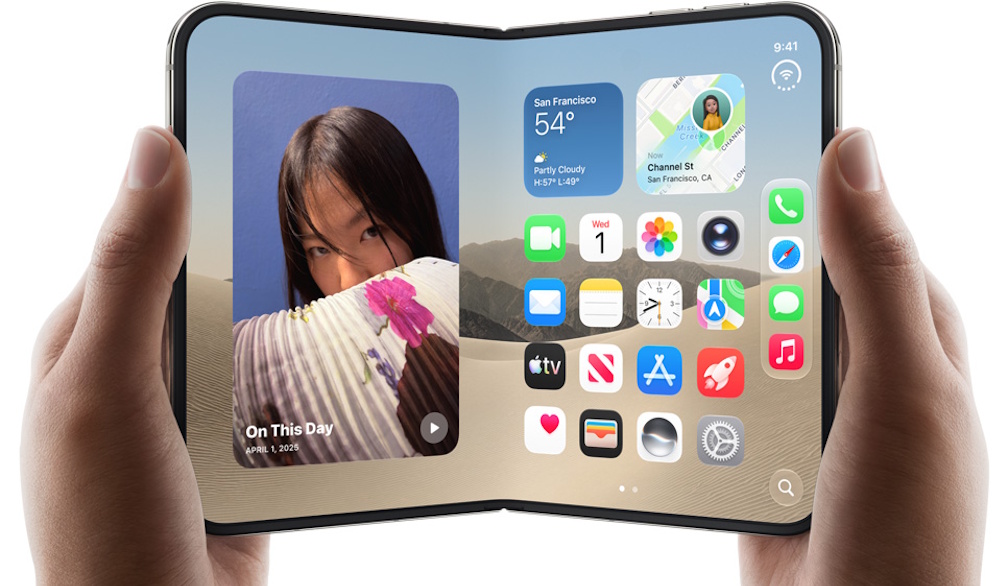
A folding screen is an engineering achievement. The willingness to spend several thousand dollars on the device raises an equally interesting question about how technology has changed our expectations.
Apple’s iPhone Duo starts at $3,499 in Australia. Choose the highest storage capacity and the price reaches $5,899.
Those are handset prices. A mobile service, accessories and any additional protection add to the cost. Apple lists Australian availability from 23 October, putting its first folding iPhone into a market where the premium smartphone has become a substantial household purchase.
For someone watching grocery bills, fuel costs, rent or mortgage repayments, the obvious question is how a phone reached this price.
The more revealing question is how that price became something consumers would seriously consider paying.
The answer involves useful technology, gradual changes in expectations, monthly payments, brand loyalty and the growing importance of the device we carry everywhere.
A phone became much more than a phone
Calling a modern smartphone a telephone understates its role.
It is a camera, navigation system, music player, diary, scanner, payment device and portable entertainment centre. It provides access to banking, work, shopping, government services and family conversations.
For some people, it is their principal computer.
That transformation provides a powerful justification for spending more. A device used throughout the day can feel more valuable than an appliance used occasionally, even when the appliance lasts longer.
Someone who photographs their children, manages a business, reads documents and watches programmes on the same device may judge its price against all those uses.
The calculation has merit. But it needs a second question: how much additional benefit does the most expensive model deliver over a cheaper phone?
Many of the functions that make smartphones indispensable are available well below the premium end of the market.
The usefulness of the category does not automatically establish the value of every upgrade.
What folding adds
The Duo gives Apple a new proposition: a device that folds for carrying and opens to provide a larger working area. Apple describes it as offering its largest iPhone display.
The attraction is easy to understand.
A larger screen can make reading, viewing photographs and working with information more comfortable. Someone who finds a conventional phone cramped may welcome more space without wanting to carry a separate tablet.
For some buyers, that could be a meaningful improvement.
A folding device also involves additional engineering. A flexible display and a hinge must function together through repeated use, while the software must accommodate changing screen arrangements.
Those demands help explain why a folding phone belongs in a premium category. They do not, by themselves, reveal how much of its retail price reflects manufacturing, development, marketing or the margin a brand believes customers will accept.
The buyer’s practical test remains straightforward: will the larger screen improve everyday use enough to justify the additional cost?
The price rose one step at a time
Consumers did not move directly from inexpensive basic handsets to a phone approaching $6,000.
The change happened through successive generations of devices and increasingly elaborate product ranges.
Larger screens, better cameras, more storage and premium finishes gave manufacturers new reasons to charge more. Labels such as Pro and Pro Max helped establish a hierarchy in which a capable standard model could sit several steps below the most desirable option.
Each price became a reference point for the next.
A customer already considering a phone costing several thousand dollars may see a folding model as an additional expense within an accepted purchase category.
Someone whose current phone cost a few hundred dollars sees a much larger leap.
That difference matters. Prices are judged against expectations as well as household income.
An exceptionally expensive model can also change the appearance of the rest of the range. Beside a $5,899 handset, another costly phone may suddenly seem restrained.
Its price has not fallen. The comparison has changed.
Monthly payments soften the number
A large purchase feels different when expressed as a recurring payment.
Dividing the Duo’s $3,499 starting price over 36 months produces a handset cost of approximately $97 a month. At $5,899, the equivalent is about $164 a month.
These are simple illustrations, excluding a mobile service, fees, interest or any particular provider’s terms.
They show how the conversation changes.
Instead of asking whether a phone is worth several thousand dollars, a buyer may ask whether another monthly payment fits the budget.
Trade-in credits can reduce the amount payable and give an existing device a useful second life. Discounts can improve the deal too. But consumers still need to understand the full cost, including any conditions attached.
Spreading a purchase changes when it is paid for. It does not erase the price.
Apple is selling familiarity
For an established Apple customer, a new iPhone sits within a wider collection of devices and habits.
Photographs, apps, messages, passwords and subscriptions may already be organised around the system. A watch, computer or tablet may form part of the same routine.
Remaining with a familiar platform has practical value. Switching requires attention, time and sometimes replacement purchases.
This helps explain why an Apple customer might become interested in folding phones when Apple offers one, even though other manufacturers have already developed the category.
They may have been waiting for the format to arrive within the system they know.
That is a valuable commercial position. A manufacturer whose products are embedded in daily life competes on familiarity and continuity as well as specifications.
Desire belongs in the explanation
Consumer technology is also a source of pleasure.
People buy devices because they enjoy design, appreciate new capabilities or simply want to own something different. A new form of phone can revive interest in a category where successive models otherwise look familiar.
There is nothing inherently unreasonable about that.
People spend discretionary income on watches, bicycles, cameras, travel and other interests. A technology enthusiast may receive considerable enjoyment from a premium phone.
The distinction is between recognising a discretionary purchase and treating it as a necessary upgrade.
Wanting a new device is a valid personal preference. It does not mean the existing one has stopped being useful.
Does an expensive launch mean the world is ready?
A premium phone can attract buyers during a period of household financial pressure because those buyers do not represent every household.
Some have high incomes or substantial savings. Others place a particularly high value on technology. Some may postpone other spending to afford the purchase.
A manufacturer needs a sufficiently large market at its chosen price. It does not need universal affordability.
Early enthusiasm also needs careful interpretation. Delivery delays can reflect demand, limited production or a combination of both. They cannot establish how widely a device will be adopted over time.
The more useful evidence will emerge through sustained sales, customer satisfaction, reliability and whether owners consider the purchase worthwhile after the novelty fades.
The purchase price is only the beginning
For buyers considering a device at this level, ownership deserves as much attention as the launch presentation.
How long will it be kept? What would a screen repair cost? What does optional protection cover? Is the highest storage tier necessary? Could a less expensive phone perform the same daily tasks?
Storage is particularly relevant to the Duo’s headline price. Apple’s Australian range starts at $3,499 for 256GB and reaches $5,899 for 2TB. The most expensive version is therefore a specific configuration, rather than the entry price every customer must pay.
Keeping a phone longer can spread its cost over more useful years. Replacing it frequently creates a different ownership calculation.
At these prices, an upgrade deserves the same considered attention as other substantial household purchases.
The Times View
The iPhone Duo is a revealing technology story because it combines an engineering development with a change in consumer expectations.
The smartphone has earned a central place in modern life. Its usefulness helps explain why people are prepared to spend serious money on it.
But essential access to communication, banking and work does not require every consumer to own the most expensive device available.
For some buyers, a folding screen will offer worthwhile convenience. For others, the appeal will be enjoyment, design or the satisfaction of trying something new. Both can be understood without assuming that the purchase makes equal sense for everyone.
The remarkable achievement is that a phone approaching $6,000 can now enter an ordinary conversation about upgrading.
Technology has transformed what we carry in our pockets—and gradually transformed what we consider reasonable to pay for it.