The Hidden ROI of Commercial Fit Outs for Australian Healthcare Practices
Running a private healthcare practice in Australia involves a delicate balance between clinical excellence and small business strategy. For many medical and dental clinic owners, physical infrastructure is often viewed as a sunk cost. However, treating a clinic redesign merely as an aesthetic upgrade ignores its potential as a powerful revenue-generating asset. As highlighted in a recent analysis on Australia's business paradox, navigating economic uncertainty requires strategic capital investments. For independent healthcare professionals, this means acknowledging that clinic upgrades are essential operational necessities rather than discretionary spending.
Navigating Capital Expenditure and Compliance
Modern medical and dental fit-outs require substantial upfront capital. In 2026, the average cost for a commercial healthcare fit-out ranges from $1,850 to $3,500 or more per square metre. Typical dental clinics, for example, often require an initial investment between $280,000 and $481,500. This is largely due to the complex requirements of specialised plumbing, suction lines, and lead shielding for X-ray equipment. Additionally, up to 30 percent of a modern healthcare budget is consumed by hidden services, such as upgraded power capacities, data cabling, and commercial HVAC systems.
To manage these technical demands without facing budget blowouts, clinic owners must partner with experienced specialists. Engaging a premium design and construction firm like Consilo ensures that complex workflow layouts and strict infection control guidelines are integrated flawlessly from day one. Expert teams understand how to balance aesthetic desires with the rigid compliance requirements of the Australian healthcare sector to provide accurate forecasting and execution.
Furthermore, the regulatory landscape for healthcare construction is increasingly stringent. Practices must design their sterilisation rooms to comply with updated AS 5369:2023 standards for reprocessing reusable medical devices. Similarly, the Australian Dental Association mandates strict spatial separation between decontamination zones and general clinical areas. Navigating these requirements upfront prevents costly structural retrofits and legal penalties down the track.
The Science of the Servicescape and Patient Retention
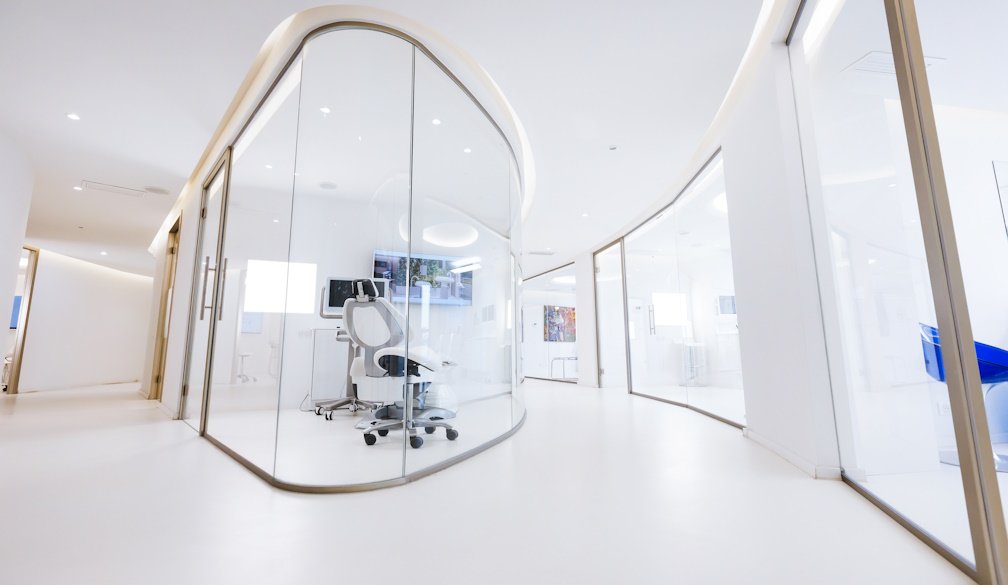
Beyond technical compliance, the design of a clinic has a profound psychological impact on patients. There is a major architectural shift occurring across the Australian healthcare industry. Clinics are moving away from sterile, intimidating layouts toward comfortable commercial lounge aesthetics. This involves investing heavily in acoustic soundproofing, biophilic design elements, and ambient lighting to actively reduce clinical fear. With dental anxiety currently affecting approximately one in six Australian adults, and recent data showing that 30 percent of Australians delayed or avoided necessary visits in the past 12 months due to fear, an intimidating environment directly impacts a clinic's bottom line.
The financial return of a calming environment is not just anecdotal. A study published in PLOS ONE examining the role of servicescape in patients' clinic care waiting experience demonstrated that optimising a physical environment and spatial layout can drive a 50 percent improvement in patient re-patronage. Furthermore, the research showed that a positive servicescape contributes to a 31 percent increase in word-of-mouth referrals. Engineering confidentiality and calmness into a commercial space ensures privacy for consultations and fosters a lower-stress environment that keeps patients coming back.
Measurable Financial Benefits of Intelligent Design
When treated as a strategic small business investment, a well-executed commercial fit-out delivers several measurable returns on investment. Practice owners who look beyond the initial price tag can unlock operational efficiencies that directly scale their daily revenue potential.
The most significant financial benefits include:
- Optimised Operational Capacity: Strategic space utilisation and advanced acoustic zoning can increase functional consult room capacity by up to 30 percent. This allows clinics to accommodate more practitioners and see more patients daily without expanding their physical footprint.
- Tax and Cash Flow Advantages: Over 70 percent of Australian healthcare practices utilise specific financial instruments, such as chattel mortgages or specialised fit-out loans, to manage cash flow during redesigns. Additionally, the permanent cementing of the $20,000 Instant Asset Write-Off threshold from 1 July 2026 allows practice owners to immediately deduct eligible fit-out equipment and furnishings on a per-asset basis.
- Mitigating Future Risk: Integrating mandatory Disability Discrimination Act compliant amenities and accessible design features upfront can account for 15 to 20 percent of a total fit-out budget. However, doing so proactively prevents expensive structural changes later and opens the practice to a broader patient demographic.
- Enhanced Staff Retention: The correlation between workplace ergonomics and staff well-being is undeniable. A beautifully designed, highly functional workspace helps attract and retain top-tier clinical and administrative talent in a competitive labour market.
Ultimately, the decision to undertake a commercial fit-out should be driven by business strategy rather than mere aesthetics. By understanding the hidden returns of increased patient retention, improved operational capacity, and strict regulatory compliance, independent healthcare practices can position themselves for resilient, long-term growth. In a sector where patient trust and clinical efficiency are paramount, investing in the right physical environment is one of the most profitable decisions a practice owner can make.