How to Choose the Right Mini Excavator for Your Next Project — A Guide for Australian Owners
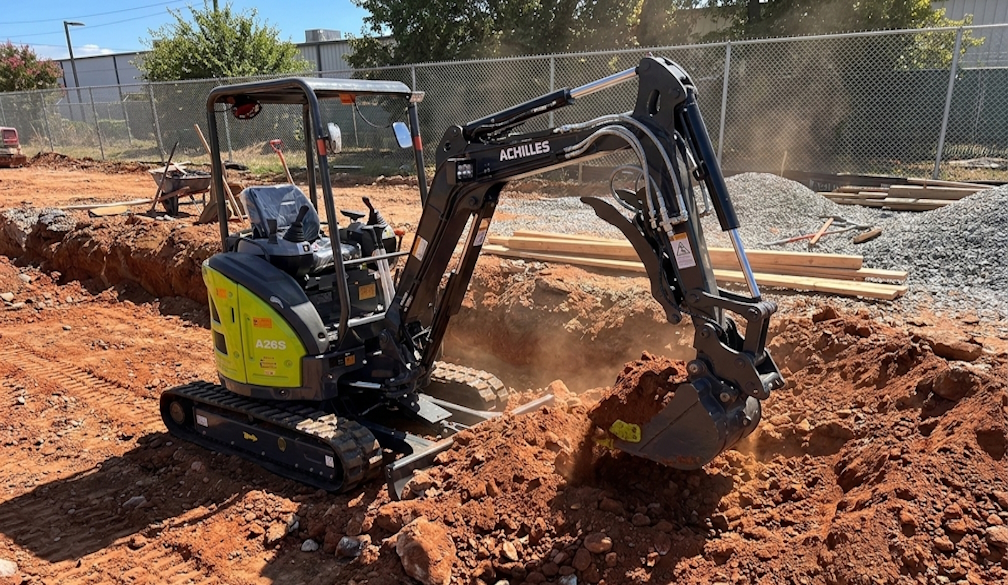
Ask any landscaper, hobby farmer or owner-builder in Queensland or New South Wales what changed their working life, and many point to the same thing: the day they stopped hiring a digger by the day and bought a mini excavator of their own. These compact machines have become one of the most useful tools on Australian worksites and rural properties — small enough to fit through a side gate, yet capable of trenching, landscaping, post-hole boring and demolition that would take days by hand.
But "mini excavator" covers a wide range, from tidy 1.2-tonne machines that slip between fence lines to 6-tonne units that hold their own on a commercial site. Buy too small and you'll wait for the machine to catch up to the job; buy too big and you'll struggle to float, store and manoeuvre it. Here's how to get the decision right the first time.
Start with the job, not the machine
The most common mistake is choosing on price alone. Before you look at a spec sheet, write down the three jobs you'll do most often and the tightest space you'll have to work in.
- Residential and landscaping work — garden reshaping, small retaining walls, drainage, irrigation trenches — is usually well served by a 1.2 to 1.9-tonne machine. This class passes through a standard gateway (around 900–1,000mm) and won't tear up a finished lawn.
- Hobby farms and acreage — fencing, dam maintenance, clearing, tree work — suit 2.2 to 2.6 tonnes, where you gain reach, dig depth and the stability to swing a full bucket.
- Small commercial and construction jobs — footings, bulk trenching, road works — call for 3.8 to 6 tonnes, with the breakout force and hydraulic flow to run heavier attachments all day.
If you're between two sizes, size up. A machine slightly larger than today's job holds its value and saves you renting a second unit next year. Dealers such as Achilles Machinery carry the full spread from around 1.2 up to 6 tonnes under one roof, making it easier to compare classes side by side.
The specs that actually matter
Brochures love horsepower, but the numbers that decide whether you'll be happy are:
-
Operating weight — the best single proxy for how much work the machine can do and how stable it is.
-
Dig depth and reach — check against real jobs (2.5m suits most drainage, less so for deep footings).
-
Bucket capacity and breakout force — where cheaper machines quietly fall short; low breakout force turns hard clay into a bad afternoon.
-
Engine brand — a proven engine such as a Yanmar is far easier to service and resell than an obscure powerplant.
-
Auxiliary hydraulics — to run an auger, breaker or tilting bucket you need the right hydraulic circuit from day one.
Attachments turn one machine into ten
A mini excavator is really a hydraulic carrier — its value multiplies with what you hang on the end. An auger set turns a day of hand-digging post holes into an hour's work; a tilting bucket grades a batter without constant repositioning; a jack hammer breaks up old concrete without a hire fee. Before buying, confirm the machine has the hydraulic flow for the attachments you want, and that they're available locally rather than shipped in on a six-week lead time.
Don't skip warranty, finance and back-up
Heavy machinery is a multi-year investment, so the paperwork matters as much as the metal.
- Warranty. Coverage ranges from twelve months to five years depending on brand. Some SDLG-badged machines carry up to a five-year warranty, while entry Achilles-branded units are typically covered for three years. A longer warranty signals how confident the maker is in the build.
- Finance. Spreading the cost can make ownership cheaper than ongoing hire once you use a machine even one day a week. It's worth asking about flexible equipment finance and comparing the numbers with what you spend on rentals and labour.
- Back-up. Parts availability and service support separate a good purchase from an expensive paperweight. Buying from a dealer with walk-in showrooms in Brisbane and Sydney lets you inspect a machine, test it, and get help fast if something goes wrong.
The bottom line
Match the operating weight to your tightest access and heaviest job, make sure dig depth and reach cover the work you'll actually do, choose a recognised and serviceable engine, and confirm the hydraulics suit the attachments you'll use. Understand the warranty, compare finance against hire, and buy where you can see the machine and get local parts and service. Get those right and a mini excavator stops being a purchase and becomes one of the most profitable tools you own. For most Australian landscapers, small builders and property owners, the question isn't whether a compact digger pays for itself — it's how quickly.