Wheel Loader Lift Capacity Explained: Tipping Load vs Rated Load
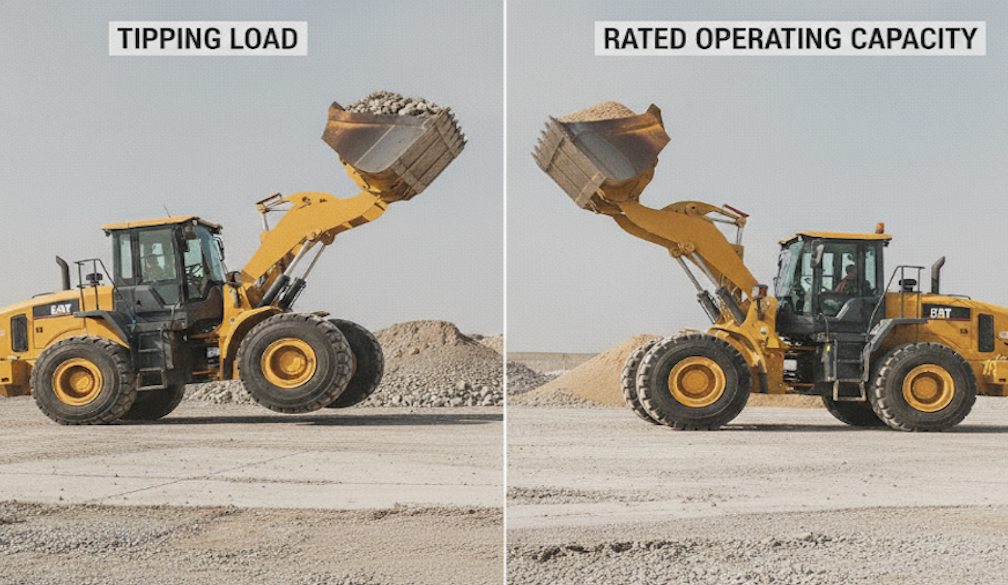
Of all the numbers on a wheel loader spec sheet, lift capacity is the one buyers misread most often. Two machines can look identical on paper — same bucket, same horsepower — yet one safely carries far more than the other. The confusion almost always comes down to two terms that get used loosely: tipping load and rated load. Understand the difference and you'll buy the right size the first time, work more safely, and stop comparing the wrong figures between brands.
The Two Numbers That Actually Matter
Wheel loader lift capacity isn't a single number. It's really a relationship between two:
-
Tipping load — the weight in the bucket at which the machine begins to tip forward (the rear wheels start to lift off the ground). It's the physical limit of stability.
-
Rated load (rated operating capacity, or ROC) — the weight you're actually meant to work at, every day, safely. It's a fraction of the tipping load with a built-in safety margin.
The mistake is treating tipping load as "how much it can lift." It isn't. Tipping load is the point of failure, not the working spec. The number you compare and operate to is the rated load.
How Rated Load Is Calculated
Here's the part most spec sheets don't spell out clearly. For wheel loaders, the industry standard (SAE/ISO) sets rated operating capacity at 50% of the full-turn static tipping load.
In plain terms: take the weight that would tip the machine, halve it, and that's your rated load. That 50% isn't conservative for the sake of it — it's the margin that keeps you upright when the ground is uneven, when you brake with a full bucket, when you accelerate up a ramp, or when the load shifts. Real work is dynamic, and dynamic forces eat into stability fast. The 50% rule is what stands between "a full bucket" and "a loader on its nose."
Static vs Full-Turn — Don't Get Caught Out
Most wheel loaders are articulated (they steer by bending in the middle), and this is where buyers get tripped up. An articulated loader has two tipping load figures:
-
Static, straight ahead — the higher number.
-
Static, full turn — the loader articulated to full lock, which shifts the centre of gravity and reduces stability, typically by 10–15%.
Rated operating capacity is always based on the full-turn figure, because that's the worst case you'll hit while loading trucks or maneuvering in a yard. If a brochure quotes a big "tipping load" without saying straight or full turn, assume it's flattering the machine. Always size off the full-turn rated load.
Why a Bigger Bucket Doesn't Mean More Capacity
This catches people constantly: bucket size is measured in volume (cubic metres), but rated load is a weight (kilograms). A bucket that's perfectly safe with mulch can blow straight past the rated load when it's full of wet sand or gravel.
So the honest way to read lift capacity is: can this machine carry a heaped bucket of my heaviest material within its rated load? If the answer is no, the bucket is too big for the loader — no matter how good the volume figure looks. (If you're sizing buckets, this pairs directly with matching bucket size to material density.)
Where Achilles Fits
This is exactly why honest, clearly-stated specs matter — and where Achilles Machinery earns its place with Australian buyers. Achilles wheel loaders publish their full-turn rated operating capacity, not just a flattering straight-ahead tipping figure, so you're comparing the number you'll actually work to. The range is offered with buckets and attachments matched to each model's rated load, which means you're not guessing whether a setup will overload the front end with dense material. And because Achilles backs its loaders with parts and service on the ground in Australia, you get real support sizing the machine to your heaviest regular job rather than a spec sheet and a shrug. If you're weighing two models that look similar, it's worth a conversation — the right rated load for your material is the difference between a loader that works all day and one that's always at its limit.
What Else Affects Your Real Capacity
Rated load on paper assumes a standard bucket on flat ground. In the real world, a few things quietly reduce what you can safely carry:
-
Attachment weight. Swap the standard bucket for a heavier 4-in-1, forks or a grapple and the attachment's own weight eats into your usable payload. Heavier tool = less material.
-
Slopes. Tipping load drops on a gradient. Working across or up a slope reduces your effective rated load — respect it.
-
Tyres and counterweight. Worn tyres, low pressures, or a missing counterweight all shift the stability equation.
-
Lift height. Capacity is usually quoted at full lift; the higher you carry, the less stable the load.
None of these change the spec sheet, but they all change what's safe on your site.
How to Use This When You Buy
-
Compare rated operating capacity, not tipping load — and make sure it's the full-turn figure.
-
Match it to your heaviest material, by weight, with margin to spare.
-
Account for the attachment you'll actually run, not just the standard bucket.
-
Leave headroom for slopes and uneven ground — don't buy a machine you'll run at 100% all day.
Frequently Asked Questions
Is the tipping load the maximum I can lift? No. Tipping load is the point at which the machine starts to tip — a limit you should never approach. Your working maximum is the rated load, which is roughly half the full-turn tipping load.
Why is rated load only about 50% of tipping load? Because real work is dynamic. Braking, turning, accelerating and uneven ground all reduce stability. The 50% margin keeps a full bucket safe under those conditions, not just sitting still.
Does a higher horsepower engine give more lift capacity? Not directly. Lift capacity comes from stability — weight, wheelbase, counterweight and articulation — not engine power. A more powerful engine cycles faster and pushes harder, but it won't let you safely carry more than the rated load.
Buy to the Right Number
Lift capacity isn't the biggest number on the brochure — it's the rated operating capacity at full turn, matched to the weight of what you actually move. Get that right and everything else (cycle times, safety, machine life) follows. If you'd like a hand matching rated load to your material and attachments, the Achilles Machinery wheel loader range is on show at the Brisbane and Sydney yards six days a week — tell us what you're lifting and we'll point you to the right size.