Safety Gear for Lifeguards: What Should Be in Your Kit?
Being a lifeguard involves more than merely sitting on a high chair monitoring swimmers. Ensuring everyone's safety around the water is a great responsibility.
Lifeguard action during an emergency must be quick, hence they must be always ready. This is when wearing the correct safety gear becomes crucial. Even the most experienced lifeguard cannot efficiently perform without appropriate tools.
Having a well-prepared pack may make all the difference between a catastrophe and a life saved—by the pool or at a crowded beach.
From basic tools to specialised emergency equipment, in this blog, we will go over the necessary tools every lifeguard should carry.
Section 1: Basic Lifeguard Safety Gear
Let’s start with the basics. Every lifeguard needs to have a few key pieces of gear that they keep with them at all times.
-
Lifeguard uniform: The uniform has purposes beyond just dress code compliance. People should be able to rapidly recognise the lifeguard as it should be brilliant and immediately observable. Usually, lifeguard uniforms consist of red or yellow shirts and shorts, which distinguishes them. This facilitates the identification of someone in difficulty or the search for them should they require assistance.
-
Whistle: Whistle is crucial for communication. Shouting just won't be enough when the beach or pool is noisy. Whether it's to discourage dangerous activity or signal for support during a rescue, a whistle lets lifeguards catch attention right away. Though little, this gadget makes a great difference.
-
Sunscreen and sunglasses: Lifeguards work long hours in the sun, hence unprotected can be highly harmful. Sunscreen guards against unpleasant and damaging sunburns, while sunglasses let them see properly even in high sunlight. It's about being able to execute their jobs well, not only about comfort.
-
Footwear: Appropriate footwear is also quite vital. On damp areas, lifeguard shoes or sandals must provide grip and enable fast mobility. You want to avoid slipping and falling while hurrying to help someone, hence choosing the correct shoes is really essential.
Each of these items is for the lifeguard’s own safety that also helps them act fast and effectively in emergencies. Without them, the job would be much harder, and the risks would be higher.
Section 2: First Aid Kit Essentials
Accidents happen, and sometimes, they’re not always water-related. That’s why a lifeguard should always have a well-stocked first aid kit close by. Here’s what it should include
-
Bandages, antiseptics, gauze: Common injuries are cuts, scratches and bruises, particularly around pools where people might trip or fall. Bandages and antiseptics help heal and cover these cuts while larger injuries can be covered by gauze.
-
Tweezers and scissors: If you need to cut tape or clothes, scissors can be used; else, tweezers are useful for removing splinters or trash from a wound. Though they seem like little tools, when time is of the importance these may be really helpful.
-
Pain relievers and anti-inflammatory medications: Though they might not need to be hurried to the hospital, a person may be in pain. For mild injuries in particular, having simple painkillers can make a big difference.
Quick access to these tools is essential because it allows lifeguards to treat minor injuries right away. This not only helps the injured person feel better faster but also prevents small issues from becoming bigger problems.
Section 3: Lifesaving Equipment
Now let’s talk about the gear that lifeguards need to actually save lives in the water. These are the specialised tools that help them rescue people from dangerous situations.
-
Rescue tubes and rescue boards: Rescue tubes are flexible and convenient for carrying. They are carried back to safety and used by lifeguards to assist a struggling swimmer stay afloat. Conversely, rescue boards are more like little surfboards. When the water is rough, they are fantastic and they may also be paddled fast to get to someone in need.
-
Throw bags and lifebuoys: Someone who is too distant to swim to but yet within reach is tossed a rope from throw bags. Throwing lifebuoys—round floating rings—to someone in need gives them something to hang onto until the lifeguard can reach them.
-
Fins and masks for underwater rescues: Sometimes rescues have to take place underwater. In such cases, fins and masks are quite helpful. Particularly in muddy circumstances or if the person in distress has dipped below the surface, masks enable lifeguards to see well under the water and let them swim quicker.
Each of these tools is designed for different situations, from strong currents at the beach to deeper pools where someone might be hard to spot. Without the right equipment, it can be much harder, if not impossible, to rescue someone in trouble.
Section 4: Personal Protective Equipment (PPE)
While the focus is always on helping others, lifeguards also need to keep themselves safe. This is why following personal protective equipment is a must:
-
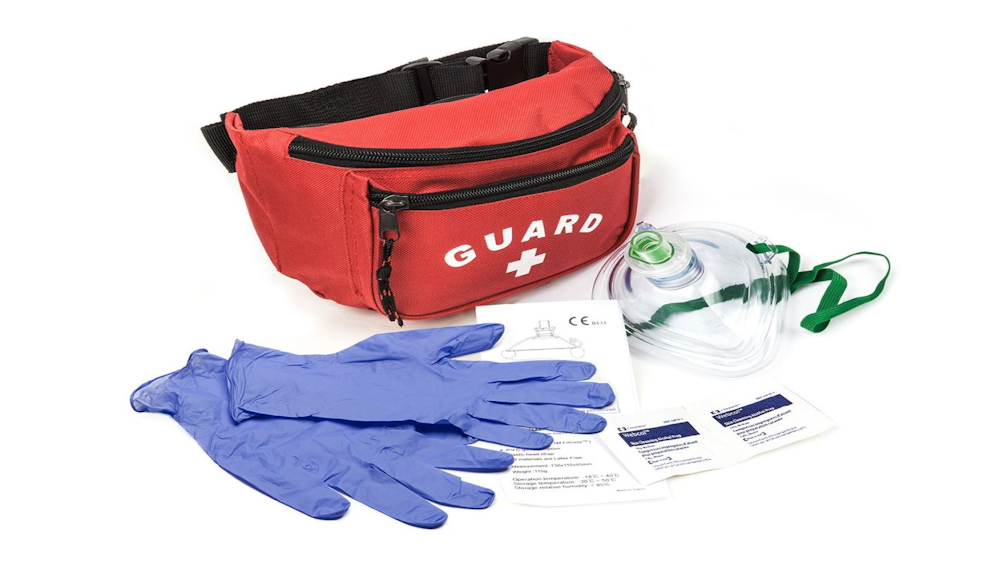
Gloves and protective clothing: When handling injuries, gloves are crucial to prevent coming into touch with blood or other fluids. When handling harmful chemicals or cleaning up hazardous spills close to the pool, among other circumstances, protective gear might be helpful.
-
Safety goggles (for water and chemicals): Water, particularly in pools, might occasionally include chemicals that can be hazardous if they come into contact with eyes. Goggles ensure personal safety by shielding lifeguards from splashes and by allowing one to handle chemicals or clean surfaces.
Keeping these things is good practice while also being necessary. If a lifeguard gets hurt, they can’t help anyone else, so PPE is as important as any other tool in their kit.
Section 5: Resuscitation Tools
Every second counts in an emergency and occasionally a lifeguard may have to do CPR. Thus, it is imperative to have the appropriate resuscitation instruments.
Resuscitation tools include essential devices such as a bag-valve mask, oxygen tank, and resuscitation mask to restore breathing, along with airway management tools like oropharyngeal and nasopharyngeal airways. Mega Medical is the best place to buy these resuscitation equipment.
Having resuscitation equipment on hand can make all the difference, particularly in cases of delay in emergency services arrival. Though you want you never to use it, you will be happy if it is there when you need it.
Conclusion
So, in the end, lifeguarding is a difficult job, wearing the correct safety gear helps to ease some of the responsibilities. From simple tools like whistles and uniforms to specialist tools like rescue tubes and first aid packs, every piece of equipment is vital.
Lifeguards must be ready to act quickly as they have to be ready for everything and so routinely inspect and update their gear. Seconds count in an emergency and a well-equipped lifeguard may make all the difference between life and death.
Therefore, whether you are considering becoming a lifeguard or already one, make sure your gear contains all you need to be safe and protect others too.