Brisbane Airport’s second runway has made room to move — but parking still comes at a price
- Written by: The Times
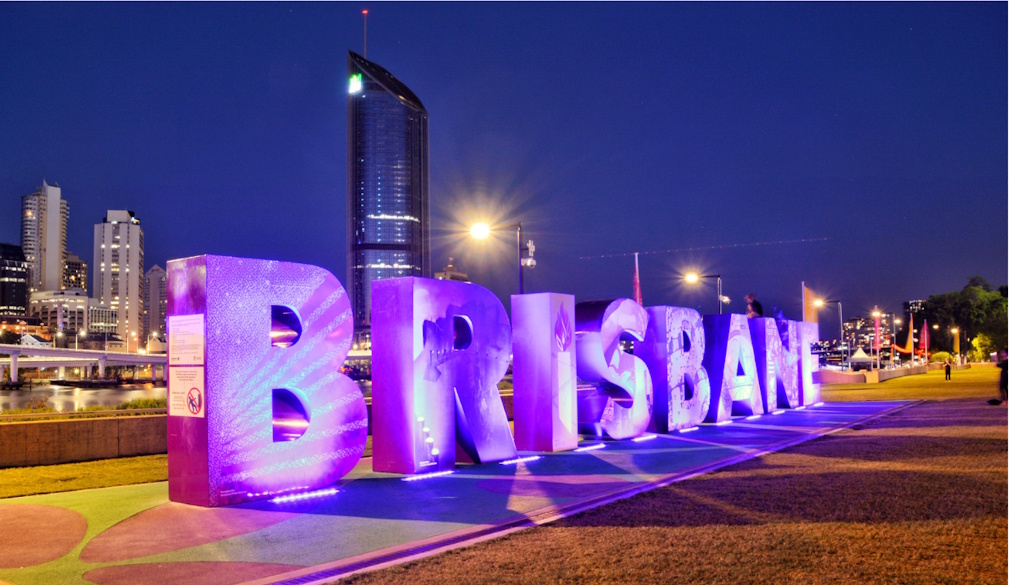
Two parallel runways give Queensland’s main airport more capacity and greater flexibility. For travellers, the benefits extend from flight scheduling to keeping aircraft moving during maintenance. Aircraft noise and the cost of reaching the terminal remain harder problems.
An airport’s most valuable improvement can be something passengers barely notice.
An aircraft approaches without an extended wait. A departure finds an available runway. Essential maintenance proceeds while other flights continue operating.
These are among the practical advantages of Brisbane Airport’s parallel runway system.
The western runway opened on July 12, 2020, following a $1.1 billion project. Its arrival gave Brisbane substantially more room to accommodate flights and manage future growth. Unfortunately, its opening during the pandemic meant the infrastructure initially arrived when much of the travelling public could not use it.
With passenger demand now at record levels, its purpose is much easier to appreciate.
Brisbane Airport reports that it handled approximately 25.2 million passengers in the 2025–26 financial year, up 4 per cent on the previous year. International passenger numbers rose 7.9 per cent and domestic numbers increased 2.5 per cent.
The question is what the extra runway means for those passengers.
More room for arrivals and departures
Before the parallel runway opened, Brisbane’s airline operations depended heavily on its original main runway. The airport also had a smaller cross runway, so it is more accurate to describe the project as a second major parallel runway than to suggest Brisbane previously had only one strip of pavement.
The main operational constraint was nevertheless straightforward: arrivals and departures competed for access to the same principal runway.
An arriving aircraft required a safe interval ahead of the next arrival. Departing aircraft needed opportunities between those arrivals.
Parallel runways provide additional ways to organise that traffic.
Airservices Australia describes independent parallel operations as allowing aircraft to arrive and depart simultaneously on the two runways, with the necessary separation. This provides a high-capacity operating mode for busy periods. The usable capacity still depends on weather, traffic and the operating arrangements in force.
For airlines, additional runway capacity creates scope for more services and a wider choice of flight times.
For passengers, it reduces one potential bottleneck in the journey.
A stronger foundation for predictable timetables
A second runway cannot guarantee an on-time flight.
Aircraft can arrive late from another airport. Thunderstorms can interrupt operations. Airlines can encounter crew, engineering or ground-handling problems.
Nor should improved punctuality be claimed solely from the existence of another runway without a comparable analysis of flight performance.
The operational advantage is that Brisbane has more options for accommodating traffic.
When runway demand approaches available capacity, relatively small interruptions can create queues. Additional capacity gives controllers greater flexibility to manage arrivals and departures, subject to safe operating conditions.
That provides a stronger foundation for dependable schedules. It also creates room for growth without every additional service competing for the same narrow opening.
The distinction matters: the runway improves what the airport can accommodate, while an individual flight’s punctuality depends on the wider aviation network.
Less need to wait in the air — when capacity is the constraint
Passengers approaching Brisbane from the south or north may remember being told that their aircraft was waiting for a landing sequence.
Sometimes that delay involves a holding pattern. Sometimes controllers use speed reductions, radar vectors or a longer route to establish safe spacing.
The familiar description of aircraft waiting to enter a “single circuit” captures the frustration, although airline arrivals are managed through a wider network of arrival routes and sequencing procedures.
A parallel runway system can reduce the need for airborne queuing when runway capacity is the limiting factor.
However, it would take specific before-and-after air traffic data to establish how much holding has declined near Byron Bay or the Sunshine Coast. Weather and other restrictions can still produce delays, even with two major runways available.
The reasonable conclusion is that Brisbane now has greater capacity to absorb arriving traffic. That does not mean holding has disappeared.
Maintenance is easier to accommodate
Runways require regular inspection, repairs and substantial renewal work.
Having another major runway gives an airport an alternative when one is unavailable or operating with restrictions.
Brisbane demonstrated that flexibility during major maintenance on its original eastern runway in 2024. Its available length was temporarily reduced from approximately 3.5 kilometres to 2.7 kilometres, and wide-body aircraft were moved to the western runway.
The airport continued operating while the work proceeded.
That is a tangible benefit of the investment.
It does not mean maintenance previously always closed Brisbane Airport, or that two runways make a complete closure impossible. Some incidents, weather events and infrastructure failures can affect the whole airport.
It means work on one major runway need not remove the airport’s only suitable runway option for larger aircraft.
For passengers, this resilience can be just as valuable as additional capacity on an ordinary day.
Over water where conditions allow
Brisbane’s position beside Moreton Bay creates an opportunity to direct aircraft over water and reduce the number of homes beneath parts of their approach and departure paths.
Under ordinary parallel operations, wind direction generally determines whether aircraft arrive over the bay and depart over the city, or arrive over the city and depart over the bay.
A separate operating mode allows arrivals and departures to take place over the bay simultaneously, using different runways in opposite directions. These over-water operations are preferred overnight when suitable conditions permit.
However, the bay cannot simply be selected for every flight.
Wind, visibility, cloud, runway conditions and traffic levels constrain the available options. Safety determines which arrangements can be used.
Airservices introduced revised over-water departure paths in November 2024 to keep aircraft over water for longer before crossing the coastline.
The continuing noise action program also shows that the second runway has not resolved community concerns. Additional capacity benefits travellers, but people beneath flight paths can experience the consequences very differently.
More passengers, more opportunities
The runway enables growth; it does not create airline demand by itself.
Airlines still make commercial decisions based on passenger demand, aircraft availability, costs and competing opportunities.
Nevertheless, room to accommodate additional services is an important asset. Brisbane’s latest passenger figures show airlines adding capacity as the airport’s domestic and international networks expand.
For Queensland, that supports connections between regional centres, the state capital and overseas destinations.
For travellers, the potential gains include more departure choices, additional connections and greater flexibility when arranging a trip.
The parking bill remains painful
The airport experience begins before check-in and continues after baggage collection.
For motorists, that experience can carry a substantial additional bill.
At the time of writing, Brisbane Airport’s published ParkLong drive-up rates at both terminals include:
| Parking duration | Published drive-up charge |
|---|---|
| 4–24 hours | $69 |
| 3 days | $136 |
| 5 days | $190 |
| 7 days | $226 |
The airport advises passengers to book online in advance for better prices. These figures are terminal ParkLong drive-up rates, rather than the cheapest available quote across all parking products.
Even a short visit can be expensive. Published domestic ParkShort rates include $27 for 30–60 minutes and $33 for one to two hours.
For families, regional travellers and people whose flight times make other transport difficult, parking is a meaningful part of the total cost of flying.
Comparing advance bookings, more distant parking options and alternative transport is therefore part of planning the trip.
The Times view
Brisbane’s parallel runway investment has given Queensland a more capable aviation gateway.
Its clearest advantages are additional capacity, greater operating flexibility and the ability to accommodate major runway work while flights continue.
Those benefits support the travelling public, even when passengers never see the operational decisions that make their journeys possible.
The remaining test is broader than aircraft movements. A successful airport must also manage noise responsibly and provide an affordable journey to and from its terminals.
Brisbane has made more room in the sky. For many travellers, the bill for leaving the car on the ground still hurts.
To learn more about operations at Brisbane and other airports visit https://www.aerodue.com/en-gb/?market=AU