The Inland Rail: What It Could Have Delivered — and What Happens Now
- Written by: The Times
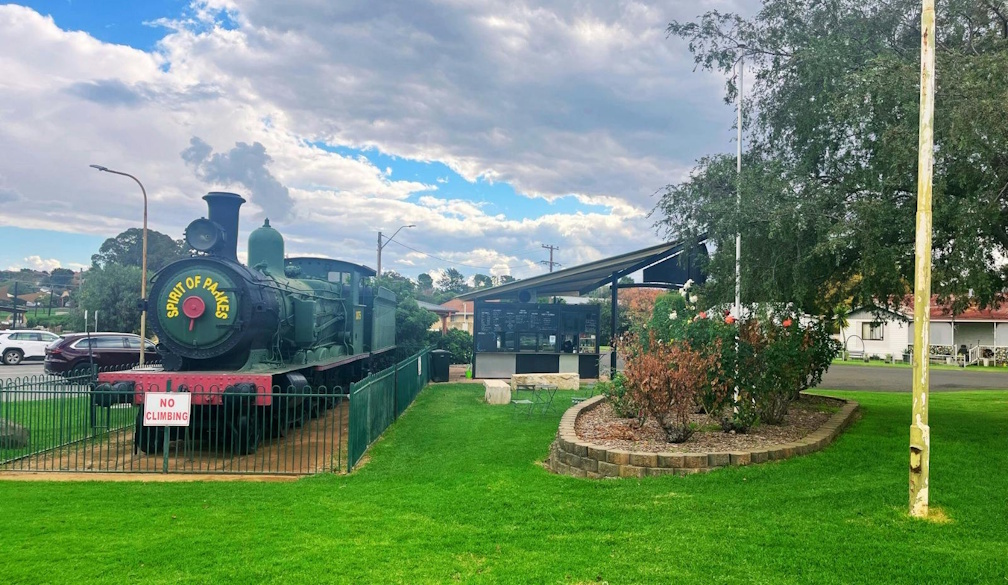
For more than a decade, the Inland Rail project was positioned as one of Australia’s most ambitious nation-building infrastructure undertakings — a freight backbone linking Melbourne and Brisbane through regional Australia, bypassing congested coastal corridors and unlocking inland economic potential.
Now, with the project effectively curtailed in its original form under the Australian Labor Party federal government’s reset and staged approach, the question is no longer what it will do — but what it could have done if delivered as originally envisioned.
The Vision: A Spine Through the Interior
The Inland Rail was conceived as a 1,700-kilometre freight corridor connecting Victoria and Queensland via inland New South Wales. Managed by Australian Rail Track Corporation, it promised a transformational shift in how goods move across the eastern seaboard.
At full capacity, the line aimed to:
-
Cut freight transit times between Melbourne and Brisbane to under 24 hours
-
Double-stack containers for efficiency
-
Divert freight from heavily congested coastal rail lines
-
Reduce reliance on long-haul trucking
The strategic logic was compelling: a faster, cheaper, and more reliable inland freight route would reshape supply chains across the country.
What It Could Have Delivered
Had the Inland Rail been completed as originally scoped, the economic and structural benefits would likely have been significant.
1. A National Freight Rebalance
Australia’s freight task is growing rapidly, driven by population increases, e-commerce, and export demand. Inland Rail was designed to absorb a substantial share of that growth, easing pressure on existing infrastructure.
Instead of competing for space with passenger services along coastal lines, freight operators would have had a dedicated corridor — improving reliability and scheduling.
2. Regional Economic Expansion
Perhaps the most transformative aspect was its potential impact on inland towns.
Regional centres such as Parkes, Narrabri, and Toowoomba were expected to become logistics hubs, attracting:
-
Warehousing and distribution centres
-
Agribusiness processing facilities
-
Manufacturing operations
This would have driven job creation and population growth away from already stretched capital cities.
3. Reduced Road Congestion and Emissions
Heavy freight trucks dominate long-distance transport along the eastern corridor. Inland Rail offered a shift toward rail, which is:
-
More fuel-efficient per tonne
-
Safer, with fewer heavy vehicles on highways
-
Lower in emissions per kilometre
The environmental and safety dividends were central to its justification.
4. Export Competitiveness
For agricultural producers in inland Australia, faster access to ports meant fresher products, lower costs, and greater competitiveness in global markets.
The line would have strengthened supply chains from farm gate to export terminal.
Why the Project Was Scaled Back
Despite its promise, Inland Rail became increasingly controversial.
Costs escalated sharply, with estimates rising into the tens of billions. Engineering challenges — particularly in flood-prone areas and difficult terrain — complicated delivery timelines.
Community opposition also intensified in parts of New South Wales and Queensland, with concerns over:
-
Land acquisition
-
Environmental impact
-
Noise and disruption
In response, the federal government initiated a review and ultimately opted for a revised, staged approach — effectively halting the project in its original continuous form.
While not formally “cancelled,” the Inland Rail as initially conceived — a seamless Melbourne-to-Brisbane inland corridor — has been fundamentally altered.
What Has Been Terminated — and What Remains
The government’s position has been to prioritise viable sections while reconsidering or delaying others, particularly the most complex and costly components.
This has resulted in:
-
Some completed or near-completed segments continuing to operate or progress
-
Critical gaps remaining unresolved
-
A loss of the end-to-end efficiency that defined the original concept
Without full connectivity, the network risks becoming a series of partial upgrades rather than a transformative national corridor.
Will It Still Be Useful?
The answer is nuanced.
Yes — but at reduced impact.
Completed sections of Inland Rail will still deliver benefits:
-
Improved freight capacity in specific regions
-
Faster transit times on upgraded segments
-
Localised economic activity around operational hubs
However, without full integration:
-
Freight operators may still rely heavily on coastal routes
-
The efficiency gains of a continuous inland corridor are diluted
-
Investment confidence in associated industries may weaken
In infrastructure terms, the value of a network often lies in its completeness. Partial delivery limits system-wide gains.
The Cost of an Incomplete Vision
There is a broader strategic question at play: what happens when large-scale infrastructure projects lose continuity?
Australia has historically struggled with long-term infrastructure planning across political cycles. Projects of this scale require:
-
Multi-decade commitment
-
Stable funding frameworks
-
Bipartisan support
When direction changes midstream, the consequences include:
-
Sunk costs without full return
-
Reduced investor confidence
-
Missed opportunities for economic transformation
Inland Rail risks becoming a case study in these challenges.
The Political and Economic Context
The government’s decision reflects competing pressures:
-
Budget constraints and rising project costs
-
Community resistance
-
A desire to prioritise near-term, high-impact investments
At the same time, the national freight task continues to grow.
Australia still faces the core problem Inland Rail was designed to solve: how to move increasing volumes of goods efficiently across vast distances.
That problem has not disappeared — only the proposed solution has changed.
What Comes Next?
Several pathways remain open.
Incremental Development
The government may continue to upgrade and connect sections over time, effectively delivering the project in stages rather than as a single integrated build.
Alternative Freight Strategies
Investment may shift toward:
-
Coastal rail upgrades
-
Intermodal terminals
-
Road infrastructure improvements
Private Sector Involvement
There is potential for increased private investment in logistics infrastructure, particularly if government-led projects stall.
A Missed Opportunity — or a Delayed One?
It is too early to declare Inland Rail a failure. Infrastructure of this scale often evolves, adapts, and re-emerges in different forms.
However, what is clear is that the original vision — a continuous inland freight spine transforming regional Australia — has been compromised.
If completed as planned, Inland Rail could have reshaped the economic geography of the eastern states, driving growth inland and easing pressure on coastal corridors.
In its current form, it may still deliver value — but not at the scale once promised.
The Bottom Line
The Inland Rail project highlights a fundamental tension in Australian infrastructure policy:
-
Ambition versus affordability
-
National vision versus local impact
-
Long-term gain versus short-term constraint
For businesses, regional communities, and the broader economy, the question remains open:
Will Inland Rail eventually become the backbone it was meant to be — or remain a fragmented network of unrealised potential?
The answer will shape how Australia moves its goods — and its economic future — for decades to come.